Does Window Tint Reduce Glare and Eye Strain While Driving? What East Tennessee Drivers Should Know
Yes. Quality window tint reduces glare and eye strain by lowering the amount of harsh sunlight that reaches your eyes through the side and rear windows. Less bright light means less squinting, fewer sudden brightness changes, and less work for the muscles that control your pupils and eyelids. That adds up to more comfortable driving, especially on long trips.
Window tint has limits, though. Most daytime glare comes through the windshield, where Tennessee only allows tint above the AS-1 line. The best results come from combining legal side and rear tint, a windshield sun strip, and good driving habits.
For drivers in Athens and across East Tennessee, glare is part of the daily drive. That includes early-morning runs up I-75 toward Knoxville, evening commutes home from Chattanooga, and winding mountain roads near Etowah and Madisonville. This guide explains how tint reduces glare, where it helps most and least, which shades are legal, and which film types work best for eye comfort.
What Causes Glare and Eye Strain While Driving?
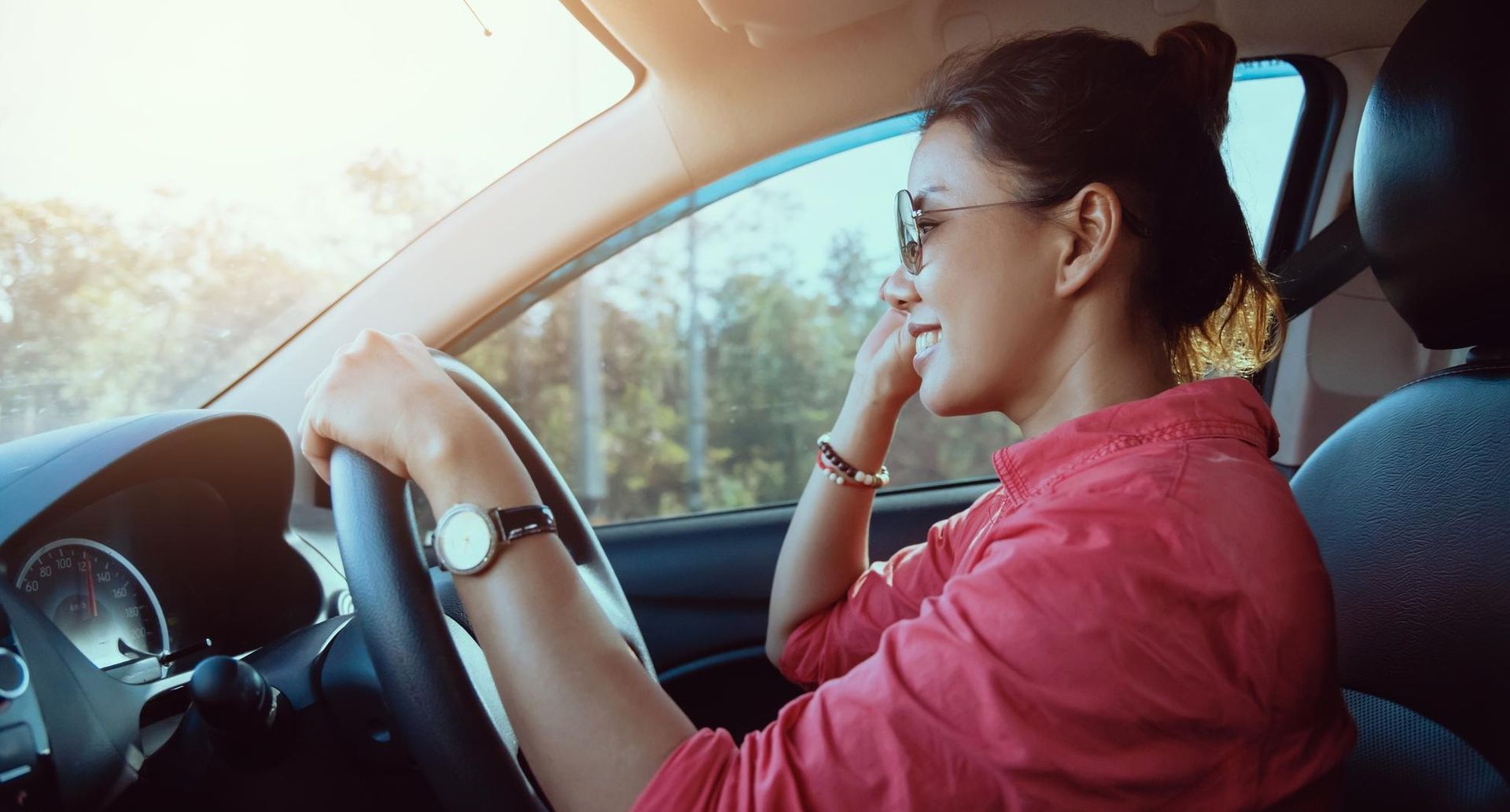
Glare happens when bright light enters your field of vision and overwhelms your eyes' ability to adjust. Eye care professionals generally describe two kinds:
- Discomfort glare makes you squint, blink, and look away. It doesn't block your vision completely, but over time it causes fatigue, tired eyes, and sometimes headaches.
- Disability glare actually reduces your ability to see, such as when a low sun washes out the road ahead or headlights blind you at night.
Eye strain while driving builds when your eyes constantly react to changing brightness. Squinting, rapid pupil changes, and focusing hard to pick out details in harsh light all wear on your eyes. Long drives make it worse.
Common glare sources for East Tennessee drivers include:
- Low morning and evening sun on east-west routes like TN-30 and US-11
- Sun coming through side windows on north-south trips along I-75 and US-411
- Reflections off wet roads after afternoon storms
- Bright sky and reflections off other vehicles' windows and chrome
- Rapid light-to-shadow changes on tree-lined and mountain roads
- Headlights from following vehicles reflecting in mirrors at night
How Does Window Tint Reduce Glare?
Window tint is a thin, multi-layered polyester film applied to the inside of your vehicle's glass. It reduces glare in three main ways.
It Lowers Light Intensity
Tint is rated by Visible Light Transmission (VLT), the percentage of visible light that passes through. A 35% film, for example, lets through about 35% of visible light. By cutting the intensity of sunlight coming through side and rear windows, tint takes the edge off harsh light before it reaches your eyes.
It Reduces Brightness Contrast
Your eyes work hardest when they jump between very bright and very dark areas. Tint narrows the difference between bright sky outside and the darker cabin and dashboard inside. That means your pupils don't have to adjust as dramatically, which reduces fatigue.
It Cuts Peripheral Glare
Side-window glare is easy to overlook, but it's constant on long drives. Sun streaming through the driver's window competes with your view of the road ahead. Tinted side windows reduce that distraction and help you stay focused forward.
Does Window Tint Really Reduce Eye Strain?
For many drivers, yes. When harsh light is reduced, your eyes don't have to squint, blink, and readjust as often. Drivers who get tinted windows commonly report:
- Less squinting on sunny days
- Less eye fatigue on long highway drives
- More comfortable visibility of screens and gauges
- A calmer, more comfortable cabin overall
Heat plays a role too. A hot, sun-baked cabin adds to general fatigue, and high-performance ceramic film reduces heat along with glare.
If you have frequent headaches, light sensitivity, or eye pain while driving, see an eye care professional. Tint can improve comfort, but it isn't a substitute for an eye exam, updated prescription glasses, or treatment for an underlying condition.
Where Window Tint Helps Most and Least for Glare
Knowing which windows can be tinted, and how much, helps set realistic expectations.
| Glare Source | Does Window Tint Help? | Why |
|---|---|---|
| Sun through driver and passenger windows | Yes, significantly | Side windows can be legally tinted |
| Sun from behind (rear window) | Yes | Reduces glare in the rearview mirror |
| Headlights behind you at night | Yes, somewhat | Rear tint softens light reflected in mirrors |
| Overhead sun over the visor | Yes, with a windshield strip | Tennessee allows tint above the AS-1 line |
| Low sun directly ahead | Limited | Windshield below the AS-1 line can't be tinted |
| Wet road reflections ahead | Limited | Mostly seen through the windshield |
| Oncoming headlights at night | No | Comes through the clear windshield |
The takeaway is that tint is very effective for side, rear, and overhead glare. For glare coming straight through the windshield, you'll still want your sun visor and polarized sunglasses.
Window Tint vs. Polarized Sunglasses: What's the Difference?
Tint and polarized sunglasses solve glare in different ways, and they work best together.
| Feature | Window Tint | Polarized Sunglasses |
|---|---|---|
| How it works | Reduces overall light intensity | Filters reflected, horizontally polarized glare |
| Covers windshield glare | Only above the AS-1 line | Yes |
| Reduces side-window glare | Yes | Yes |
| Blocks UV rays | Yes, 99%+ with quality film | Yes, with UV-rated lenses |
| Reduces cabin heat | Yes, especially ceramic film | No |
| Protects passengers | Yes | Only the wearer |
| Usable at night | Yes, with a sensible shade | No, sunglasses shouldn't be worn at night |
Polarized lenses are especially good at cutting glare from wet roads and shiny surfaces. Window tint protects everyone in the vehicle all the time, reduces heat, and blocks UV rays without anything to put on or take off. Note that polarized lenses can make some dashboard screens and heads-up displays harder to see.
Will Window Tint Make Night Driving Harder?
It depends on the shade. Very dark tint, especially limo-dark film on the front side windows, can reduce visibility at night and in poorly lit areas like rural roads and parking lots. That's one reason Tennessee sets legal limits.
At a legal shade, most drivers adjust easily. Rear tint can even help at night by softening the glare from headlights behind you that reflect into your mirrors. If you do a lot of night driving on dark country roads, consider a lighter front shade with a high-performance film. You'll still get UV protection and heat reduction without giving up visibility.
What Window Tint Is Legal in Tennessee?
Tennessee's tint law is simpler than in many states because it uses the same darkness limit on all side and rear windows. Here's a general overview:
| Window | Tennessee Rule |
|---|---|
| Windshield | Non-reflective tint above the manufacturer's AS-1 line |
| Front side windows | At least 35% VLT |
| Rear side windows | At least 35% VLT |
| Rear window | At least 35% VLT |
Tennessee also limits how reflective tint can be and allows medical exemptions for drivers with qualifying conditions. Keep in mind that VLT is measured through the film and glass combined, so your installer should select a film that keeps the final reading legal. Tint laws can change, so confirm current rules with the Tennessee Department of Safety and Homeland Security or a knowledgeable local installer.
Which Window Tint Is Best for Reducing Glare?
All quality films reduce glare, but they differ in heat rejection, clarity, and electronics compatibility. Here's how LLumar's automotive lineup compares:
| LLumar Film | Construction | Glare Reduction | Heat Rejection | Best For |
|---|---|---|---|---|
| IRX Series | Infrared-rejecting ceramic | Excellent | Best | Long commutes, maximum comfort |
| CTX Series | Nano-ceramic | Excellent | Superior | Clear phone, GPS, and radio signals |
| ATC Series | Premium dyed | Good | Good | Style and glare control on a budget |
| AIR Series | Nearly clear nano-ceramic | Mild | Superior for its clarity | Drivers who want comfort without a dark look |
Why Ceramic Film Feels More Comfortable
Glare is about visible light, but comfort is about more than glare. Ceramic films reduce glare at legal shades while also rejecting much more infrared heat than dyed films. The result is a cooler, calmer cabin with less sun beating on your face and arms. On a long drive to Knoxville or Chattanooga, that difference is easy to notice.
Why Film Quality Matters for Clarity
Cheap tint can create haze, distortion, or a purple tint over time, and any of these can make glare and eye strain worse. High-quality, color-stable film keeps your view crisp. All of the LLumar films above block more than 99% of harmful UV rays, and the Skin Cancer Foundation recommends window film as part of a comprehensive sun protection program.
How to Get the Most Glare Relief From Your Tint
Window tint works best as part of a complete glare-reduction routine:
- Add a windshield sun strip. A legal strip above the AS-1 line blocks overhead sun that sneaks past your visor.
- Keep your windshield clean inside and out. A film of haze on the inside of the glass scatters light and makes glare much worse.
- Replace worn wiper blades. Streaks catch sunlight and headlights.
- Wear polarized sunglasses during the day for glare through the windshield.
- Use your visor's side swing for low sun through the driver's window.
- Clean tinted windows correctly. Wait a week after installation, then use an ammonia-free cleaner and a soft cloth. Never use blades or abrasive pads.
- Get regular eye exams. An outdated prescription can make glare and eye strain feel much worse.
Why East Tennessee Drivers Choose Elite Audio & Window Tinting
Elite Audio & Window Tinting is a locally owned, authorized LLumar dealer in Athens. Its trained installers apply premium automotive film with precision, using the latest tools and techniques. LLumar auto films come with a lifetime limited warranty and are color-stable, so they won't bubble, crack, or turn purple like cheap film from discount shops.
The team takes time to understand how you drive and recommends the right film and shade for your vehicle and Tennessee's laws. As a one-stop shop, Elite Audio & Window Tinting also offers paint protection film, ceramic coating, vinyl wraps, and car audio and electronics, including dashcams and LED lighting. Customers come from Athens, Cleveland, Sweetwater, Etowah, Madisonville, Knoxville, Chattanooga, Lenoir City, Dayton, Oak Ridge, and the surrounding area.
Frequently Asked Questions About Window Tint and Glare
Does window tint reduce glare while driving?
Yes. Window tint reduces the intensity of sunlight coming through side and rear windows, which cuts glare and squinting. A windshield strip above the AS-1 line helps with overhead glare.
Can window tint help with eye strain and headaches?
Many drivers find that tint makes driving more comfortable by reducing harsh light and squinting. If you have frequent headaches or eye pain, see an eye care professional to rule out other causes.
What tint percentage is best for glare in Tennessee?
A 35% film is a popular choice because it meets Tennessee's general limit for side and rear windows while noticeably reducing glare. Your installer should confirm the combined film-and-glass reading stays legal.
Is ceramic tint better for glare than regular tint?
At the same shade, ceramic and dyed films reduce visible glare similarly. Ceramic film also rejects much more heat, which makes the overall drive more comfortable.
Does tint replace polarized sunglasses?
No. Tint and polarized sunglasses work best together. Sunglasses handle glare through the windshield, and tint reduces side and rear glare, heat, and UV for everyone in the car.
Will window tint make it hard to see at night?
Legal shades generally have a modest effect on night visibility. Very dark tint can make night driving harder, so choose a sensible front shade if you drive a lot after dark.
How long does window tinting take?
A full car typically takes about two to four hours, and front doors only can take 30 to 40 minutes. Removing old film adds about two to four hours.
Drive More Comfortably With Professional Window Tint
Window tint reduces glare and eye strain by cutting harsh sunlight through your side and rear windows. A legal windshield strip helps with overhead sun. Tint won't eliminate glare straight through the windshield, but paired with polarized sunglasses and a clean windshield, it can make a real difference in how your eyes feel after a long drive. Choose a quality ceramic film for the most comfortable ride, and stick with a legal shade for safe night driving.
Ready to make your drive easier on the eyes? Visit Elite Audio & Window Tinting at 2515 Congress Pkwy S in Athens, or call (423) 744-9119. You can also request a free estimate online and compare shades with the automotive film viewer before you book.